A few well-placed flowers make a house feel ready for Christmas faster than almost anything else. The good news is that Christmas flower arrangements don’t need to be complicated or expensive. A single bouquet, split cleverly and padded out with foliage from the garden, can dress a dining table, a mantelpiece and a windowsill all at once.
Here are our favourite ideas, from a classic red and green centrepiece to a calm white Scandi look, plus the practical stuff: what to buy, what to forage, how to keep it all fresh with the heating on, and when to order if you’re having Christmas flowers delivered.
Start with a plan (and a colour scheme)
The easiest festive flower arrangement starts with two or three colours and sticks to them. Pick one main flower, one supporting flower or berry and one type of greenery. Repeating the same mix in a few places around the house looks far more pulled-together than lots of different vases. The big question is whether you prefer classic red and green tones or a more modern frosted white and metallic palette; both look lovely, so match it to your Christmas tree and decorations.
| Colour scheme | Flowers | Foliage and extras | Feels like |
|---|---|---|---|
| Classic red and green | Red roses, carnations, amaryllis | Pine, holly, hypericum berries | Traditional and cosy |
| White winter | White roses, spray roses, gypsophila | Eucalyptus, silver fir, pine cones | Calm and elegant |
| Burgundy and gold | Deep red roses, dark chrysanthemums | Gold-sprayed seed heads, ivy | Rich and grown-up |
| Natural and rustic | Dried roses, pampas, statice | Dried eucalyptus, cinnamon sticks, oranges | Relaxed and long-lasting |
| Frosted and metallic | White spray roses, silver brunia | Frosted pine cones, silver and gold baubles | Bright, modern and sparkly |
For more on the meaning behind festive colours, our guide to red Christmas flowers covers roses, amaryllis, poinsettias and berries.
Fresh, potted or dried: which suits you?
Before you buy anything, decide what sort of display you want. Fresh cut flowers give the most colour and scent but last a week or so. A living potted plant, like an amaryllis, poinsettia, hyacinth or cyclamen, can see you through the whole festive season and makes a thoughtful gift for a host. Dried festive decorations, from statice and pampas to orange slices, last for months and can come out again next winter.
It’s also worth thinking about where it’s going. A hand-tied gift bouquet suits a friend or relative, a low arrangement works on the dining table, and a door wreath or a few garlands up the stairs make a seasonal welcome. Traditional Christmas plants and flowers include holly, ivy, mistletoe, poinsettias, amaryllis and the hellebore (often called the Christmas rose). For foliage, pine, fir, eucalyptus and ivy are the classic choices because they hold up well indoors.
Christmas table flowers: the centrepiece
The Christmas centrepiece is the one arrangement everyone will look at for hours, so it’s worth a little effort. The golden rule: keep it low. Guests need to see each other across the table, so aim for no more than about 30cm high, or go very tall and slim so people can see underneath.
The long, low table runner
Lay a runner of foliage down the centre of the table: pine, eucalyptus, ivy and a few pine cones. Tuck small jars or bud vases into it, each with one or two blooms. It looks abundant but only needs a handful of flowers.

Best for table runners
Glass Bud Vase Set (30 Mini Vases)
Thirty small glass bud vases, perfect for dotting along a table runner or lining a windowsill. You only need one or two stems in each, so a single bouquet goes a very long way.
Shop NowThe ready-made centrepiece
If time is short (and in December it usually is), a ready-made arrangement saves a lot of faff. Pop it in the middle of the table, scatter a few pine cones and tea lights around it, and you’re done.

Best ready-made centrepiece
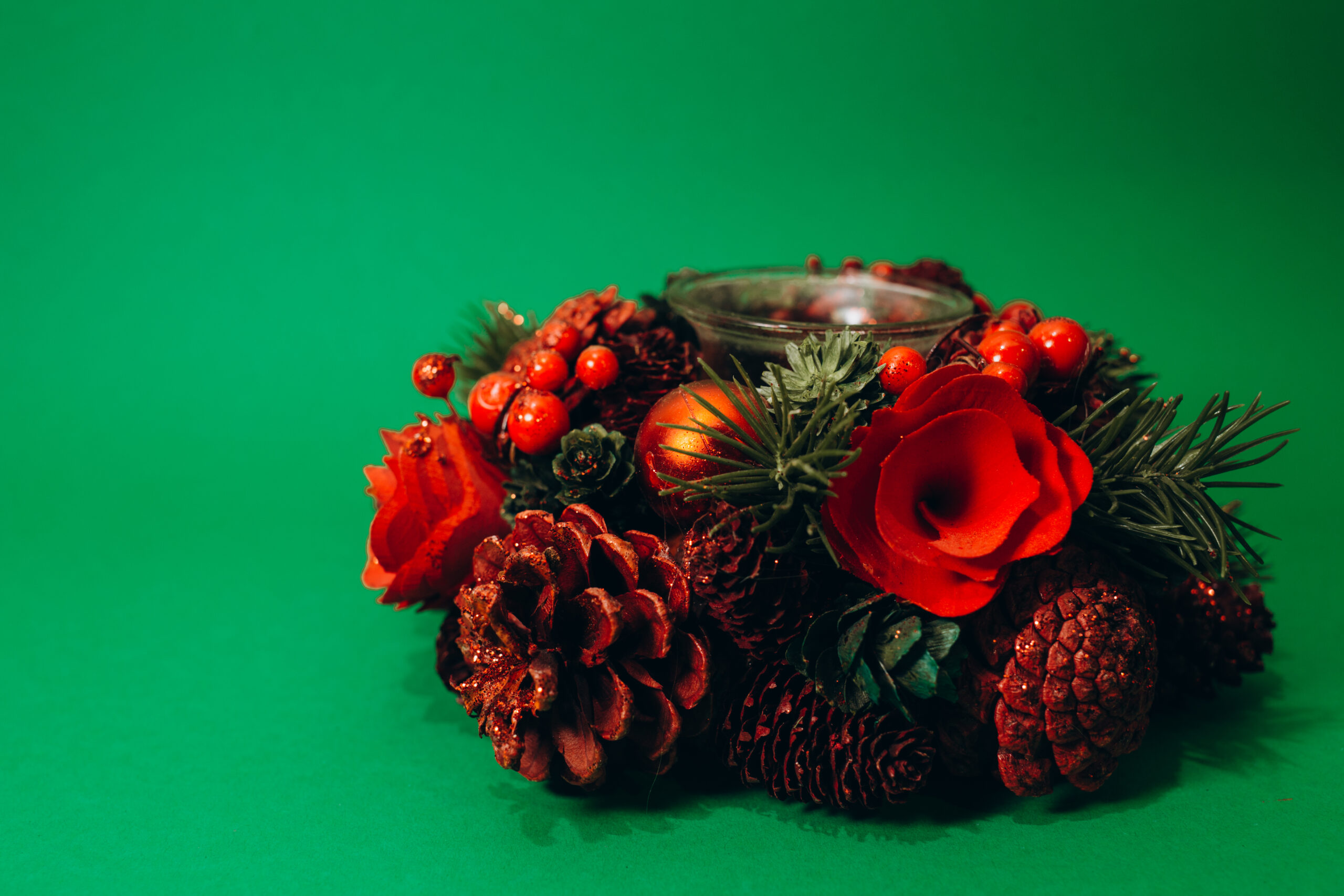
Christmas Red Rose & Pine Cone Arrangement
Red roses with pine cones, already arranged and ready to sit on the table. Ideal if you want a classic Christmas centrepiece without doing it yourself.
Shop NowGood to know: Never leave candles unattended near dried foliage or pine, and keep flames well clear of eucalyptus, which is quite oily. Battery tea lights give the same glow with none of the worry.
A ring of flameless tea lights in small glass holders around the centrepiece gives that flickering candlelit look all evening, and you can tuck them right in among the greenery without any risk.

Best for safe candlelight
LED Tea Lights (12)
Twelve battery-powered LED tea lights with a warm white glow. Safe to tuck among pine, eucalyptus and dried stems, and handy for windowsills and the mantelpiece too.
Shop NowMantelpiece and windowsill ideas
Mantelpieces are great for drama because they’re out of the way. A garland of greenery with a few glass vases standing in front looks lovely in photos, and the same stems work wrapped around a mirror or tucked between the decorations on the tree. Just remember that the heat from a working fire will finish fresh flowers quickly, so choose dried, preserved or artificial stems if your fire is lit most evenings. Good-quality faux pine makes a full-looking base that won’t drop needles onto the hearth, and a scattering of artificial red berries along it adds colour exactly where you want it.

Best faux greenery
Artificial Pine Stems (36)
A big pack of 36 artificial pine stems for building out a mantelpiece garland, padding a centrepiece or filling gaps in a wreath. No needle drop, no watering and they come out again every year.
Shop Now
Best for a pop of red
Artificial Red Berry Stems (12)
Twelve artificial red berry stems that bend easily into garlands, vases and wreaths. A safer alternative to real holly berries in homes with small children or pets.
Shop NowLike the low-maintenance idea? Our artificial flowers and dried flowers sections have plenty more stems that survive radiator season with no water at all.
How to make a simple festive flower arrangement
If you’ve got a bouquet and a free half hour, here’s a straightforward way to turn it into Christmas flower arrangements for more than one room.
- Unwrap the bouquet and trim every stem at an angle, removing leaves below the waterline.
- Separate the flowers into groups: main blooms, fillers and foliage.
- Choose your biggest vase for the table and build a loose base of greenery first.
- Add the main flowers in odd numbers (three or five look more natural than four).
- Tuck fillers and berries into the gaps and turn the vase as you go.
- Use leftover stems in bud vases for the bathroom, hallway or bedside table.
- Finish with a ribbon, a few pine cones or a sprig of rosemary for scent.
A sharp pair of floral scissors makes the whole job easier. Kitchen scissors tend to crush stems, which stops them drinking properly, and woody foliage like pine needs a clean, firm cut.

Best for clean cuts
Floral Scissors
Proper floral scissors that give a clean cut through rose stems and woody greenery without squashing them. A small buy that helps every arrangement last a little longer.
Shop NowForaging for festive greenery
You can save money by gathering a bit of foliage from your own garden. Pine, fir, ivy, rosemary and bay all work well and smell lovely. A few sensible rules: only cut from your own garden or with permission, leave plenty for wildlife, and be careful with holly, mistletoe and ivy berries in homes with small children or pets, as they’re toxic if eaten. A quick soak in a bucket of water overnight helps foraged greenery last longer indoors. Offcuts from the bottom of the Christmas tree are free, smell wonderful and are ideal for making a small Christmas wreath or filling out a vase. If you fancy having a go at a wreath, a kit with a frame and decorations saves hunting for bits, so you only need to add the greenery.

Best for a homemade wreath
Christmas Wreath Making Supplies
A Christmas wreath making kit with the supplies you need to get started, so you can add your own foraged pine, ivy and eucalyptus. A fun afternoon project and a nice one to do with the kids.
Shop NowA white Christmas look
For a calmer, Scandi feel, go all ivory and green. Pale roses and gypsophila look beautiful with silver-blue foliage and a few candles. One of the trendier decorating ideas this year is to add frosted or gold-sprayed stems for a bit of shimmer. It’s also a softer look for anyone who’s had a difficult year and doesn’t feel like bold red.

Best for a white Christmas
Winter Snow Bouquet
A wintry fresh bouquet that suits a white Christmas scheme and looks lovely with silver-blue eucalyptus and a few candles. Arrange it as it comes or split it across a couple of vases.
Shop NowKeeping Christmas flower arrangements fresh
A warm house is the enemy of fresh flowers. Keep arrangements away from radiators, the oven and fairy lights that get warm, change the water every two days and move the centrepiece to a cool room overnight if you can. Our guide on how to keep flowers fresh has 12 tips that really help.
If you’re ordering flowers in, give yourself a buffer. Courier networks are stretched in December and few deliver on Sundays or bank holidays. Check the Christmas delivery dates before you place an order for delivery, and if nobody will be in to sign for them, Christmas letterbox flowers come straight through the door.
Frequently asked questions
What flowers are best for Christmas arrangements?
Red and white roses, carnations, amaryllis, chrysanthemums and gypsophila all work well, alongside pine, eucalyptus, holly and berries. Carnations and chrysanthemums last the longest in a warm house.
How far in advance can I make a Christmas centrepiece?
Fresh flower centrepieces look best if made two or three days before Christmas Day. Greenery like pine and eucalyptus can be prepared a week or so ahead, and dried or artificial arrangements can go up whenever you like.
How tall should a Christmas table centrepiece be?
Keep it under about 30cm so guests can see each other, or choose something very tall and slim that people can see beneath.
What flowers are in season in December?
Home-grown options include hellebores, skimmia, winter jasmine, viburnum and berried holly. Florists also stock amaryllis, roses, carnations, chrysanthemums, anemones and paperwhites, most of them imported, so there’s plenty of choice for Christmas flowers.
Are Christmas plants safe for pets?
Poinsettias are a mild irritant, while holly, mistletoe and ivy berries are more harmful if eaten. Lilies are highly toxic to cats and best avoided in festive arrangements if you have one.
As an Amazon Associate we earn from qualifying purchases. Prices and delivery options are set by the seller and may change.